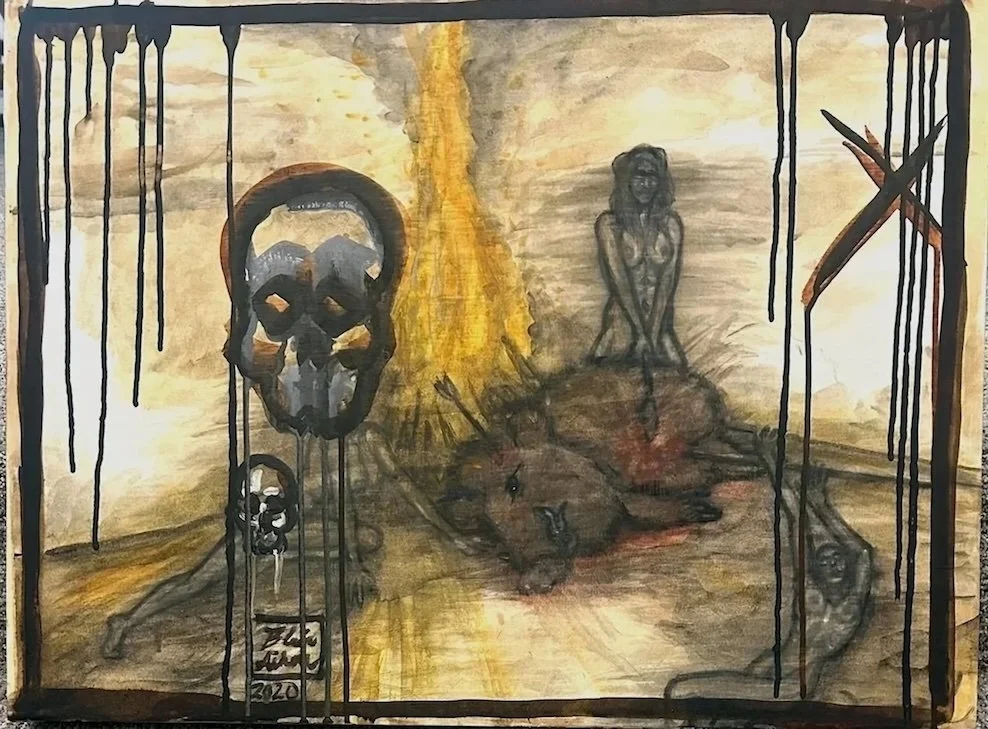
Calydonian Boar [ 18” x 24” ]· Carbon pencil, blackening watercolours, and inks on paper mounted to canvas · [ 2020–2025 ]
The mask of heroism and the chaos of the hunt.
This painting reimagines the Calydonian Boar hunt as a primal eruption of rage and collective pursuit. The massive boar, summoned by Artemis to punish King Oeneus for neglecting her sacrifice, charges through a tangled landscape—tusks gleaming, body blackening with fury and shadow. Hunters converge from all sides: Meleager at the center, driving her axe into the beast, Atalanta poised without bow her arrow already making its’ mark, the others in frantic callapse, weaponless overlapping in chaotic determination realize.
The blackening drips spread from the boar’s wounds and the hunters’ feet like blood soaking into earth, symbolizing the cost of the hunt: glory won at the price of lives, alliances fractured by pride (Meleager’s gift of the hide to Atalanta, the uncles’ rage, the ensuing slaughter). The boar itself is both monster and avenger—wild nature striking back against human neglect and hubris.
The work confronts the complexity of pursuit: how collective action can descend into violence, how rage can be righteous and destructive at once, how victory is always stained. Yet in the deepest shadow, a faint light and blood catches on Meleager’s axe blade—the possibility that even from chaos, honor, love, and new understanding can emerge when the hunt is truly faced.
A meditation on rage, consequence, the thin line between hero and destroyer, and the quiet optimism that persists when we confront the boar within and without—dark yet eternally hopeful in its refusal to look away from the charge.
Dark yet hopeful,
Studio view, or related works: blairaiken@raincage.com
Inspiration & Personal Connection
This painting draws inspiration from Peter Paul Rubens’ dynamic and dramatic *The Hunt of Meleager and Atalanta* (c. 1618–1619). Rubens’ composition captures the chaotic energy of the legendary Calydonian Boar hunt — the massive beast ravaging the land, the heroes and huntresses charging forward in a frenzy of spears, dogs, and raw courage.
In the ancient myth, the Calydonian Boar was sent by the goddess Artemis as punishment after King Oeneus neglected her. The hunt united Greece’s greatest warriors, yet it also exposed deep fractures — rivalry, jealousy, and the tragic consequences of pride. Atalanta’s arrow struck first, but Meleager’s decision to award her the trophy ignited a deadly chain of events that destroyed his own family.
In my version, I explore the psychological weight of that hunt — the moment when pursuit turns chaotic, when the line between glory and destruction blurs, and when the beast we chase becomes a mirror for our own inner turmoil. The blackening layers trace the slow accumulation of consequence, the cost of collective ambition, and the way one act of pride or desire can unravel everything.
Through this work, I meditate on how we are all drawn into hunts — for recognition, for justice, for meaning — and how those pursuits can both unite and destroy us.
Yet even in this moment of frenzy and inevitable loss, a faint gleam persists on the tip of a spear or the curve of a tusk — a quiet reminder that every hunt, however destructive, still carries the possibility of self-understanding and hard-won wisdom.
Dark yet hopeful.
Studio view, or related works: blairaiken@raincage.com
Dark yet hopeful.
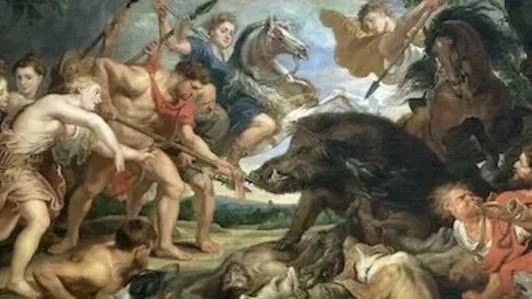
Peter Paul Rubens, The Hunt of Meleager and Atalanta, c. 1618–1619